Learning Is More Than Watching Lessons
A learner can watch an entire video course and still struggle to apply the concepts independently.
Assessments provide a way to measure whether learning is actually taking place.
Short quizzes, practice questions, assignments, and tests can help learners recall information and identify areas where they need more practice.
For subjects such as accounting, taxation, financial reporting, Excel, and accounting software, this becomes especially important because practical understanding matters as much as theoretical knowledge.
Immediate Feedback Helps Learners Improve
One of the advantages of digital learning is the ability to provide feedback quickly.
Instead of waiting until the end of a course to discover knowledge gaps, learners can use quizzes and assessments throughout their learning journey.
For example, after completing a lesson on a particular accounting concept, a short assessment can help learners determine whether they have understood the topic before progressing to the next lesson.
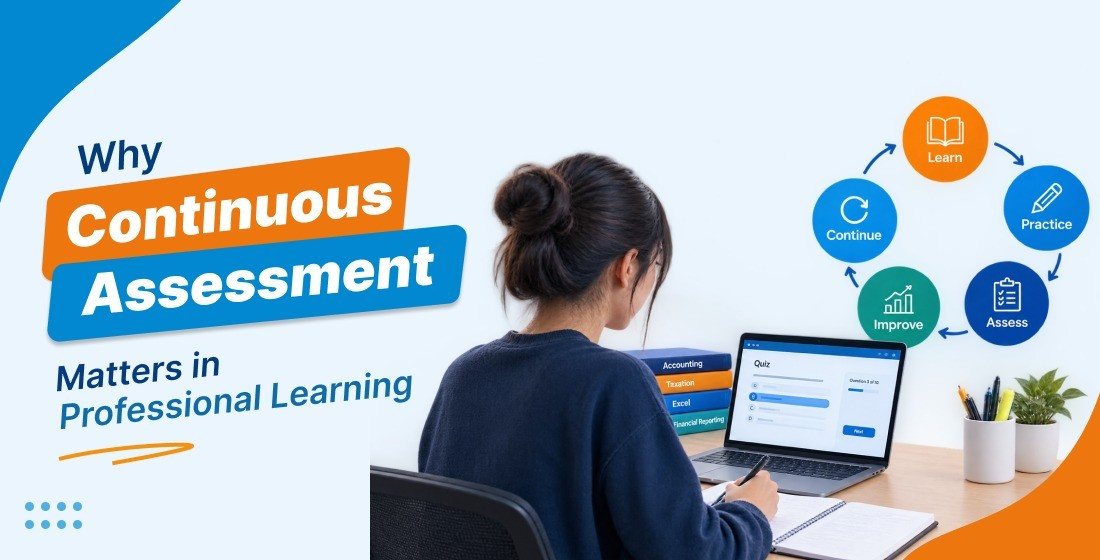
This creates a simple cycle:
Learn → Practice → Assess → Improve → Continue
Assessments Also Help Instructors
Continuous assessment is not only useful for learners.
For instructors and training providers, assessment data can reveal which topics learners are finding difficult.
If many learners perform poorly on a particular assessment, it may indicate that the topic needs additional explanation, examples, or learning resources.
This allows educators to make more informed decisions about how they deliver their courses.
Making Digital Learning More Structured
An LMS can make continuous assessment easier to manage by bringing learning and evaluation into the same platform.
Institutes and training providers can create quizzes, assignments, examinations, and other assessments while monitoring learner progress.
Instead of managing learning materials, attendance, assessments, and results separately, an LMS can bring these activities together in one organized system.
From Course Completion to Learning Outcomes
The success of a course should not only be measured by how many learners enrolled or completed it.
A more meaningful question is:
What did learners actually learn?
Continuous assessment helps move the focus from course completion to learning outcomes. It gives learners a clearer understanding of their strengths and weaknesses while giving educators useful information about overall performance.
As professional education becomes increasingly digital, combining quality course content with regular assessment can create a more engaging, measurable, and effective learning experience.
The goal is simple: not just to finish a course, but to actually learn from it.
0 Comments
Be the first to share your thoughts on this article.